Showing posts with label R. O'Donnell. Show all posts

8.10.2010

hard nightmares

a nightmare slapped me hard
woke me up to stare and blink at nothing
to wonder all about it
this crazy man wanting to smash me all to bits
took a crowbar to my head
beat out a rhythm
beat it good
beat it hard
while the violence of it made me cry
i hid my face and sobbed
Knew the monster
Knew the beast
Knew the man
holding that bloody crowbar
drip, drip, dripping
crimson to the floor
soaked the cheap carpeting
1970’s shag drank my essence
until the dream escaped
hid back inside my sleep buster
so that I carried it with me
for days
for weeks
for months
my private nightmare
chained to me
until another came along

7.30.2010

THE BOILER ROOM'S POETRY SCREAM SHOUT-OUT POETS

Brook Hofpar, Tobias De Vor, Dawn Gathings, Jason Munford, Kitty Gibson, with special guest Amy McKenzie and host R. O'Donnell will be reading their poetry this Friday the 30th @ 8pm at the Boiler Room, 711 Water Street, Port Towsend, WA.


POETRY SCREAM is an edgy humorous poetry reading whereby five uncensored poets are unleashed onstage. Our aim is to make poetry readings dangerous again.

The Boiler Room is a non-profit all-ages venue for music art, poetry, and theater. A youth-run business, The Boiler Room fosters a culture of volunteers and celebrates community, growth, learning and empowerment of youth and the young-at-heart. We are located in the heart of a small Victorian seaport (Port Townsend, Washington State) in the Pacific Northwest.

This is a FREE event!


Links:
http://www.ptbr.org
http://poetryscream.wordpress.com

8.28.2008

PETER SALETT - IN THE OCEANS OF THE STARS


By R. O'DONNELL
GENRE
FOLK
PUBLISHER
DUSTY SHOES MUSIC

Peter Salett is a very gifted musician. He has written, scored, and performed multiple songs for such films as Forgetting Sarah Marshall, The Ten, Down in the Valley, The Baxter, The Maldonado Miracle, Wet Hot American Summer, Keeping the Faith, and the soon to be released documentary 21 Below. Directors love him because his music compliments and enhances their visions. People like listening to him because his sound is so profound, intricate, and dreamy, a “play it again, Sam,” over and over only to find something you missed listening to it the fifth or sixth time around.

His most recent fifth CD offering, In The Oceans Of The Stars, is a stellar achievement that doesn’t disappoint. Whether it’s the oh-so melancholy ethereal ride of "Magic Hour," the tender sway of "Far, Far Away," a timeless folk duet "Between the Dark and the Light" (thank you Amy Miles,) or the gentle acoustic gem "Sunshine," song after luscious song is a mini-picture show inside your head. It’s just so damn cinematic. This is a headphones secure, do not disturb listening experience to clear the mind of all the daily chatter that plagues us. For my jaded, tired ass, I’m so obliged to simply and so completely "Fly Sparrow Fly" away with it. I think we all deserve that, and Peter Salett knows that just as well. I picture him composing these haunting American stories in his head while walking in the rain down a gritty Manhattan street, and then while lying on his back in a field of wheat next to an old trestle tracks, a solitary train whistle echoing up above.

I notice a lot of name comparisons–which happens with true indefinable talent–everyone from American folk/roots pop singer-songwriter Josh Rouse to Academy Award–winning songwriter, singer and pianist Randy Newman, that I just smile and think, no, no, no… Peter Salett. That’s it. Its just time to give the man his due. Salett is just so boldly original that you don’t want it to ever go away. The traditional comparisons to other more recognizable talents only helps secure that hope. But whatever the mainstream press is comparing him to, you might want to start by getting In The Oceans Of The Stars drifting through your headset as fast as iTunes will allow you to download it. You’ll be happy to meet the exceptional singer/songwriter who is as he will always be "True In Time."

source: r-productions

7.18.2008

TIME TO GET BAT-TIZED


by
R. O'Donnell

You’re a Batman aficionado, a been-there-done-that read-it-all about Gotham’s Dark Knight, and you’re having a little debate with another claiming to be a Batman buff. Okay then. Your buddy digs down deep into the super heroes’ celebrity, and throws a question at you about the earlier Batman Detective comics (gulp) and a little ditty about the misguided super hero Blue Beatle. Yeah...? Well, was he one, two, or three super heroes trying to get a piece of the Gotham crime-fighting pie? Um...? How about naming the Gotham City Police Department? I’m talking about the first, second, and third shift, and the top cop they reported to? Okay, no problem, easy, huh? Planet Zurenarrh? Could you tell me a bit about Planet Zurenarrh? You’re stumped, you’re hemming and hawing, starting to sweat, want to change the subject and then "bingo" – The Essential Batman Encyclopedia, page 60-61 has got the answer to the Blue Beatle riddle–three by the way, it’s in the book, and I’ve got one (Big Joker laugh, folks) And Zurenarrh, page 385, that planet on the other side of the galaxy that in 1958 called upon Batman to protect them from alien invaders–boul-ya! Mission accomplished!

The reason you come off smelling like the Batman scholar of all time is because Bob Greenberger, former DC Editor, has done it all for you. He’s packed into 400 plus pages all you would ever need to know about the who-what-when-where-and why of the entire Batman legacy. The Essential Batman Encyclopedia, a completely updated version of the 1976 Michael Fleisher Encyclopedia of Comic Book Heroes, Volume 1: Batman, covers 70 years of Batman history in one whoop-ass book. And if that doesn’t baffle your buddies, plug their pie-holes with loads of insider scoop on ALL the Batman core titles and many of the Batman family books–well? The damn thing is certainly heavy enough that you could easily threaten the little buggers with it–believe me, they’ll shut up.

Everything is here and great for late night reading: blanket over your head, favorite tunes plugged in your ear, candy bar, flashlight in hand, turning the pages as if they were gold leaf–C’mon. The Essential Batman Encyclopedia covers DCU storylines like "Crisis on Infinite Earths," "No Man’s Land," "Identity Crisis," and "War Games." There’s big-time Batman info from the Outsiders titles and the Justice League to the Batman squads in The Brave and the Bold. Thanks to Greenberger you get a detailed account of how characters were created and how they evolved over the years, name changes, attitude adjustments, and weapons galore. Especially Batman’s arsenal of deadly toys. The evolution over the years reveals how he slowly slips into the shadows to embrace the Dark Knight persona we all love...and fear.

And just so you don’t think it’s all text here, kiddies, the full color spreads will make your eyes pop out. Over 300 in all! Cat Girl in living color, from first introduction to her latest and greatest cat gear is enough to make you howl at the moon–ladies too. The artwork, the pen and ink, the colorings are all collector worthy. But the best part of The Essential Batman Encyclopedia is everything Batman: the Bat Cave, the Bat Car, the Batman family tree, Robin, the villains like The Joker, Two Face, Ra’s al Ghul, Penguin, The Riddler, yadda-yadda-yadda–it’s all here, folks, tenfold.

So before The Dark Knight movie hits the theatres this weekend, don’t wait to be stumped by your friends by anything Batman ever again, get all you need for your bat salvation with The Essential Batman Encyclopedia available now. Time to get Bat-tized, folks!

7.13.2008

'THE KREEP' DESKTOP WALLPAPER FREE HERE!


Writer/producer R. O’Donnell, known in Chicago for having created and produced the professional theatre company New Age Vaudeville, the New Variety cabaret, and the R. Rated Fox Chicago TV show, is about to unleash his syndicated Gothic character, The Kreep in a series of columns, books, podcasts, and merchandise published/produced by Static Multimedia.

Partnering with Static Multimedia (a devision of Static Networx), R. O’Donnell’s The Kreep a.k.a Brazillia R. Kreep–a Gothic poet, writer, and illustrator–will start appearing in regular syndication on Static Multimedia http://Staticmultimedia.com under the title Brain Waves. The first series will be reviews of classic horror on DVD such as MGM’s Midnight Movies Witchfinder General, starring Vincent Price.

“The Kreep has already made a lot of new media appearances,” says creator O’Donnell, “The Kreep’s on MYspace (http://Myspace.com/bakreep,) The Kreep’s on twitter, (http://twitter.com/thekreep,) and The Kreep’s on blogs such as got2write (http://got2write.wordpress.com,) and now The Kreep’s on Ezine Static Multimedia (http://StaticMultimedia.com) and I couldn’t be more thrilled for the interest in the guy.”

Brazillia R. Kreep a.k.a The Kreep is a forlorn Gothic poet and illustrator living in Kreepsville. The Kreep lives in an old Victorian mansion near lake Scares.

*Logo above designed by underground street artist Dull1

*Contact@r-productions.com


> Downloadable The Kreep Desktop Wallpapers here:

7.08.2008

BEWARE THE SHRUBBERY - "THE RUINS" SLITHERS ONTO DVD


by
R. O'DONNELL

Alrighty then, The Ruins, according to IMDb (and they never lie) won a Golden Trailer award nomination for best horror poster. That’s right, best horror poster. Okay. There it is then. They almost won. So, go out and find the poster if you can (allposters.com) and tape that puppy to your bedroom wall and quickly turn off the lights. Then, in the moonlight or with some candles flickering in the distance for effect, simply stare at it until it you scream your bloody head off. That’s about as scary as this picture ever gets. I mean, c’mon, guys, it’s about these pissed-off Mayan vines in Mexico that whisper a horror movie soundtrack right outta Children of the Corn and can giggle all cartoony and can even imitate your voice or the ring-tone on your cell phone–this is really scary stuff.

Written by Scott B. Smith (and he also penned the book I never heard of) The Ruins has some damned good acting in it. No, really. I’m being serious now. Mostly from the two sexy lead gals though: Jena Malone (remember her from Contact, playing the young Jodie Foster role? Now she’s all grown up and my-oh-my so cute) and Laura Ramsey (Lords of Dogtown) blonde bombshell with some muscle she can really pour it on. They both deliver the goods with their ample amount of beauty, brains, and brawn, plus the ability to cry and go insane with terror and snot dripping out their noses quite believably. Did I tell you that these monster vines with red flowers also love to dive into your cuts and suck the blood right out of you like long green stringy leaches-yum. And the guys aren’t too bad either, the best performance handed-in by Jonathan Tucker (The Texas Chainsaw Massacre remake), they just die too easily–no dramatic monologues about I could’ve been a rock star or my mother told me not come. Shame ‘cause they could’ve handled it and the plot needed some spice.

When the horror, the horror, the horror slithers around our heroes’ feet it can get kind of tense. Until you realize once again that they’re just plants. Plants, like from Munchkin land in Oz. A vine with what looks like plastic leaves t’boot. It’s hard to imagine any real danger except a truly bad case of poison ivy–yikes. And if your indulging in any illegal herbal refreshment the whole damn movie is going to turn into a giggle fest, of course. Which may not be a bad thing, I guess. Better than a total dud. Also, there’s some pretty wicked gore here and when Tucker’s character plays MD (he’s in medical school so he has everyone search for aspirin–please don’t ask) and starts lopping limbs off with a kitchen knife. And we’re not talking about the shrubbery.

But the problem is that the repulsion needed for a truly horrifying experience just isn’t enough. And there’s this whole other subplot with a tribe of Mayans trying to keep the deadly vines quarantined by killing anyone and anything in sight. Actually, the scariest part of the whole movie was the lead Mayan played convincingly by actor Sergio Calderon–he was scary as hell. Freaked the b’jesus outta me. Oh, and the thought they dumped as much money as they did into this horror shrubbery nightmare, that gave me willies for days.

Oh, and I forgot to tell you that this was the UNRATED version, way too intense for moviegoers. So, um, move away from the houseplants before you slip the DVD in. You’ve been warned.

DVD EXTRAS are pretty cool if you dug the film, like (I’m quoting the box) never-before-seen-alternate ending. Never before seen? Of course it hasn’t ‘cause it ended up on the cutting room floor. There’s an equally exciting original theatrical ending–huh? And director Carter Smith and editor Jeff Betancourt commentary that takes itself maybe a bit too seriously for deadly weeds gone amuck.

5.24.2008

HARRY WEINGER TALKS MOTOWN


by
R. O'DONNELL


I met Harry Weinger thanks to my buddy Jim Bessman of Billboard Magazine. Always turning me on to the best characters in the biz, Bessman (people person extraordinaire) arranged a dinner at this hot-spot veggie bistro on 74th street in Manhattan. On the way over, Bessman kept saying, "Harry's the coolest, man, just the coolest." And after finishing our carrot/spinach paté while talking everything from tinsel town to Motown, I looked at Bessman, exchanging a glance that confirmed, yes indeed-Harry Weinger was one of the coolest cats in town.

A tall lanky guy, Harry is a 27-year veteran of the entertainment industry, and is currently Vice President of A&R for Universal Music Enterprises, catalog reissue arm of Universal Music Group. Harry has produced, mixed, written, and edited liner notes for hundreds of reissues and compilations such as Motown family of classic recordings, the James Brown catalog and prominent artists in the Universal/PolyGram "Funk Essentials" series, and is a two-time Grammy® Award winner t'boot. Oh, and um, he's an honorary member of The Temptations, a privilege bestowed upon him by founding members Otis Williams and the late Melvin Franklin, in 1994. Unsurprisingly, Harry's nickname among Bessman and I is now "Mr. Cool."

Well, "Mr. Cool" is nonetheless on a reissue rampage these days. He's helping to produce some of America's premium musical moments. Mr. Cool is simply doing that producing thing. As the man emphatically states, "I am part of a wonderfully creative A&R team at Universal, and that atmosphere elevates everyone's projects." Cool. So we sat down with Harry Weinger, delving into gobs of veggie pâté while chatting up his hottest projects for Universal Music, his rage for music conservation, and finally answering why, the Godfather of Soul, James Brown says, "He's a genius."

Your gold and platinum awards are numerous; like Lionel Richie's The Definitive Collection, Barry White's Ultimate Collection and a Definitive Collection from Stevie Wonder. So what collection are you working on now?

Harry Weinger: First, any mention of sales awards has to point back to the artist and to the sales team at Universal Music Enterprises. I got to hand it to Bruce Resnikoff, UM's president, who put together a great team of sales and marketing people who best know how to get records up to gold and platinum. Don't get me wrong - A&R guys worry over every last track and which version and how to sequence the album for the best listening experience, and we like to think we give sales something to sell - but kudos to Bruce and the head of sales, Richie Gallo.

Recently I've finished up a Definitive Collection on Rick James. I miss him - Rick could be crazy but he was involved in his catalog and always had great insight. He remembered everything. Rick was underrated and I think he's gaining more musical respectability now, ironically at the same time that the Chappelle catchphrase has such legs.

Also working on a Sammy Davis Jr. Definitive Collection. Fascinating that in all the years he's been around, alive or dead, there's been no single disc collection encompassing his career, until now.

And coming in March is a 2-CD Martha Reeves & The Vandellas "Gold" set, which includes her solo singles as well. She's had some great hits, and even the lesser-known ones from the later 1960s are superb. Funny how it works sometimes: A couple of years ago we got hip to a great, unreleased Vandellas track in the Motown vault, "It's Easy To Fall In Love (With A Guy Like You)." Somehow it got picked for the movie Hitch. The soundtrack had the mono version - and we did a new stereo mix for this set.

And check out this ongoing series of all the Motown Singles in a 12 big box sets. Talk about going for the gusto. Just finished Vol. 4

Of course, we had fun working with The Temptations on their new album, "Reflections."

In 2000 you were a NAACP Image Award Winner for "Outstanding Album of the Year," Stevie Wonder / At The Close Of A Century (box set). Tell us about that.

Putting the box set together was a dream. Of course, the award was really to honor Stevie's great career and I am sure it was a great moment for him. Although the award was for Stevie, I did produce the set, and though I wasn't at the ceremony I was lucky that my boss Andy McKaie made sure I got a physical award. I don't display it with a spotlight or anything, but it means a lot. It was a wonderful experience to show it to my folks. They were pro-active in civil rights and I am grateful to have grown up in that household. In fact, my father once met Dr. Martin Luther King, Jr., at a dinner in 1963. The photograph of that instant used to hang in my childhood home, and a copy of it is displayed prominently on my desk at home now. In it, Dad has apparently - and I am sure very politely - interrupted Dr. King chatting with Rabbi Dr. Joachim Prinz. You look and blink and realize that the two great Drs. taking a moment with my dad were otherwise planning the Great March on Washington D.C. Where King gave his famous speech. Which my mother attended. So, in a private moment, I sometimes glance over at the NAACP Award and think, my musical hero, Stevie Wonder, was the guiding force behind all these things coming together for me personally.

Early on in your career you produced the successful radio show "The Sunday Funnies," featuring comic greats such as Bill Maher, Paul Reiser, Carole Leifer, and Larry Miller, so why not stay in the comedy biz?

Wow. You did your homework. Yes, that show was the first national media exposure for a lot of great comics. I used to go to all the New York clubs three nights a week at crazy hours. I remember getting turned down by Jerry Seinfeld, though. He wanted his jokes to be on the Tonight Show first - very confident guy. Six months to the day, there he was. HBO's comedy shows got started a few years later. The comedy clubs exploded. By then I had started working in the record business and the comedy world seemed to be doing fine without me. One thing I retained is a sense of when a comic is ready with material. I watch stand-up on TV and wonder if some of the comics out there have more than a few minutes of dick jokes.

You're a highly acclaimed scholar of American popular music, having written everything from liner notes to features for Rolling Stone magazine, when's the book coming out?

I like making records too much. Maybe one of these days.

Currently, you're a member of the Rock & Roll Hall Of Fame Nominating Committee. How did that come about?

I was honored to be asked and I am honored to say yes and serve. Besides, those meetings get pretty lively.

You received the Heroes & Legends Leadership Award in 2004 for your outstanding contributions to the Motown legacy. What is the Motown legacy, and who are some of its biggest contributors?

Motown has always been about great music. Relatable songs, wicked basslines and a happy melancholy in the feel and sound. Those records and the songs are both specific to an era and will last forever. Motown was also about a family vibe, and when you get in with Motown, you become part of the family. You find yourself wanting to go to Detroit. Berry Gordy of course is the man who started it; his sisters are the ones who nurtured his dream; the songwriters from Janie Bradford to Lamont Dozier and the Holland Brothers, from Bobby Taylor to Ivy Jo Hunter, Gloria Jones to Sylvia Moy and Mickey Stevenson and on and on... they all had incredible, simple stories to tell. And all those producers, arrangers, the recording and mixing engineers! And those voices... you can't recreate it. You can just admire it, enjoy it, study it and learn.

Why is music preservation your heart and soul?

I hear music everywhere. I am lousy at parties - I can't chat with background music playing. It's not background to me. But I am not sure I could say why I do what I do. I was always fascinated by how records get made, the layers and the nuances. I remember my first experience with a deeper appreciation of a record through headphone listening - you know, where you've got on the big-ass cans and you "fall into" a record? For me it wasn't "Dark Side Of The Moon" - it was Marvin Gaye's "Super Hits" album. When I started hearing the layers, I was a goner. That, and stories of how one step led down another path - an engineer saving a take an artist dismissed, or a record getting finished despite what the company thought - all those stories enhance the enjoyment for me. I want to share that. Of course the artists' finished results are utmost. Preserving that is #1. There's a great engineering staff in NY and creative design department out West who have the same goals - get it done but get it right.

What project are you most proud of?

I've enjoyed them all, from the Marvin Gaye Deluxe Editions of "Let's Get It On" and "What's Going On" to the Stevie Wonder iTunes box, the Four Tops box to little "Best of's" from lesser-known acts. Great albums and great songs with great stories. If I had to nail it down, that James Brown box set, "Star Time," was the first big thing I helped put together. Being the first, it holds special memories. I had a specific purpose with the set - to make a great James Brown album - and was given time to get it done in that way.

It's gotten all the accolades, Grammy, etc.. But the best and most memorable responses for me are: 1)James Brown thought enough of what we had done to write his own liner notes; 2)It's still in print, after 15 years; 3)It's a door-opener to other artists - I once stood next to a bored-looking Jimmy Page from Led Zep, with nothing to say except, "uh, er, I'm the guy who..." and once he heard "Star Time" he shook my hand so vigorously I thought he'd had a little extra in his coffee; and 4)Branford Marsalis was once asked what his favorite album was and it wasn't that he said this box that brings a smile. It's that he prefaced it with, "Of course..."

That's when I knew James Brown had the career retrospective he deserved.

It's known that the Godfather of Soul, James Brown says that you're a genius. What were the circumstances behind his praise?

You have to consider Mr. Brown's thought process. There are several meanings to that statement: - James Brown is the greatest, and since I have devoted a good portion of my life to his great catalog, I therefore must be a genius. Right? - Mr. Brown is a master at building people up and back down. So far, so good. - I should have done much better on my SAT scores 30 years ago.

What is the most important thing you would like people to know about the work you produce?

It's more than one person. It's more than taking a tape off a shelf and here you go. It's a long slog and there are many people working hard to make it right or at least doing their best to do so. And although this is fun to talk to you, it's never about any one person except the artist on the front cover.

Any comments about the current state of the music biz?

Every new evolution in technology in the last 10 years is driven by music: computers, MP3 players, cell phone downloads...it's a business in transition, but things will be OK. People love their music. They are doing anything they can to get it. We're here to get it to them.

4.21.2008

THE COMIC BOOK WORLD OF RICHARD STARKINGS


THE WORLD OF RICHARD STARKINGS
by
R. O'DONNELL

RICHARD STARKINGS, THE CREATOR OF HIP FLASK, THE ELEPHANTMEN AND FOUNDER OF COMICRAFT, CHECKS IN WITH STATIC.

Richard Starkings has been a mainstay in the world of comics for decades. His lettering work and his company, Comicraft, founded with partner John 'JG' Roshell in 1992, have won numerous awards throughout the industry. Through his publishing house, Active Images, he began with his own Hip Flask: Unnatural Selection (the collection has sold over 26,000 copies) and in only a few short years became a publisher of great note, putting out a compelling and eclectic line of graphic novels featuring some of the most talented and up-and-coming creators in the industry, including: Solstice (Steven T. Seagle and Justin Norman), The Spiral Cage (Al Davison), Ballast (Joe Kelly and Ilya), Strange Embrace (David Hine), Temptation, Skidmarks, Gunpowder Girl and the Outlaw Squaw, The Fly Chronicles, and Brickman Begins. Industry legends Dave Sim, Alan Moore and Will Eisner are just a few who have sung the praises of Active Images's lineup. Active Images's most recent graphic novel, The Nightmarist, by Duncan Rouleau (Static Interview), was launched to great critical acclaim and is currently in development at Paramount Pictures.

This July, Active Images and Image Comics release Elephantmen, a 32-page full-color ongoing monthly series (Image Comics, $2.99, Diamond Order Code: MAY06 1710) Feature stories will be by Starkings and regular series artist Moritat, with covers by Ladronn and flip covers by a who's who of comic talent, including Brian Bolland, Tim Sale, David Lloyd, Ian Churchill, Joe Madureira, Steve Skroce and Pascual Ferry.


R. O'Donnell: Born and raised in England, you worked at the famed Marvel UK's London offices as an editor, designer and writer on GI Joe, Zoids, Ghostbusters, Transformers and the Doctor Who comic strip, what was that like?

Richard Starkings: I consider myself to have been very lucky to have worked at Marvel UK during the 'Boom' years. Books such as Transformers, Care Bears and Doctor Who Monthly (I worked on them all, as did Civil War writer, Dave Strange Embrace Hine, but don't tell him I told you so!) were selling extremely well and the Captain Britain magazine, though short-lived, was something of a jewel in Marvel UK's crown at the time. At least, those of us that worked on it thought so.

In the early eighties, Marvel UK had learned to distinguish between the UK market and the US market, and as a young upstart editor I had my eyes set on the US market; I wanted to do color monthly books! Our titles, Dragon Claw's, Death's Head and The Sleeze Brothers, launched in '88 and '89, were considered misfires at the time, but with them, and alongside our GI Joe and Ghostbusters weeklies, I was able to nurture a strong group of British creators which included Dougie Justice Braithwaite (he was just 15 years old when he brought me his first samples), Simon Furman (who had already written a million Transformers stories by the end of the '80s but was able to work freelance full time on the back of Death's Head), Dan Sinister Dexter Abnett, Bryan Ultimates Hitch (just 16 years old when he brought in his portfolio, he was as precocious then as he is now), the delightful Lee Sullivan (best Doctor Who strip artist EVER) and obsessive compulsive multi-tasker Andy Majestic Lanning.

Best of all working at Marvel UK, living in London and freelancing for rivals 2000AD as a lettering robot, brought me into contact with British comic luminaries and stalwarts such as Dave Gibbons, Alan Davis, Jamie Delano, John Wagner, Alan Grant, Robin Smith, Mick McMahon, Kevin O'Neill, Lew Stringer, Steve Dillon, Steve McManus, Steve and Annie Parkhouse, Tom Frame, Steve Craddock, Brian Bolland, Alan Moore, John Higgins and Paul Gravett. It was a very small and intimate industry back then, and everyone had stories to tell and cautionary words to share. When Marvel UK's editor in chief, Jenny O'Connor, and I visited Judge Dredd writers John Wagner and Alan Grant, in an effort to woo them over to Marvel, I remember very well that owning a part of their creations was very much a sticking point in our negotiations. It was frustrating for us, and ultimately we weren't able to give them the deal or the money they wanted, but those conversations allowed us to forge a creator-owned contract for John Carnell and Andy Lanning's Sleeze Brothers, and ultimately drove me years later into self publishing so that I could own and control Hip Flask and, now, Elephantmen. Jenny eventually moved in with John Wagner-so she got something very different out of the experience-a piece of Judge Dredd!

You've been self-publishing since your teens, so I've got to ask if you where you one of those copy machine fanzine wizards?

Duplicating machines-my high school didn't have a photocopier back then. We created strange, inky carbon stencils and then the duplicator was hand cranked. I produced two copies of my Doctor Who fanzine, Galaxy Four, that way. When I produced collections of my Doctor Who cartoon strips some years later, I did those at Prontaprint, a chain of copier shops similar to Kinko's. I'm not sure if they're still in business. There was a very good one near the old Forbidden Planet store on Denmark street. Brian Bolland used to take me there to make copies of The Killing Joke pages he'd finished. I still have my set.

Is it true British lettering kings Bill Nuttall and Tom Frame originally inspired your unique design style?

I think Bill and Tom had very unique and interesting styles, and they were very kind and encouraging toward me way back when. Bill died a few years ago, and never saw Comic Book Lettering The Comicraft Way, which I dedicated to him. I did get a very nice phone call from his son, though. He was very touched. I'd never have gotten off square one without Bill's help. Although I never met him, the letter and samples he sent me are amongst my most treasured possessions.

What prompted you to move to the states?

Ahh-well, I always thought I'd like to live over here, but what brought me here was the pursuit of a lovely young lady who we'll call Sue Smith. She worked at Marvel UK for six months then moved back to LA. We broke up shortly after I moved to California, but I'll always be grateful to her for running away from me! Sweet girl.

Comicraft has been published in millions of comic books and magazines and has received loads of comic book industry awards for both lettering and design. How did your partnership with John 'JG' Roshell come about?

His girlfriend, the lovely Starshine, was the ex-girlfriend of the brother of a mutual friend. I was looking for the very first Comicraftsman to work with me on lettering assignments, and JG had been a big fan of SPIDER-MAN all his life and proved to be the perfect choice to help build the business. There wouldn't be a Comicraft without JG-he was the one who asked me how he should answer the phone... "Um, COMICRAFT!" I answered. My old roommate, Griff, was a carpenter in Venice Beach and called his business PROUDCRAFT, I just swapped out the first few letters!

You're regarded as one of the early pioneers of computer-based comic book lettering. How did the industry respond to your initial innovations?

With Fear and Loathing. Bob Harras famously told me he'd NEVER allow me to letter X-Men books digitally. He later ate those words, and his hat. It was a long hard slog. JG was constantly tweaking the font he created based on my hand lettering style-and creating new fonts all the time! We have over a hundred fonts available commercially now (comicbookfonts.com) but back then we had ONE. You tell that to the kids today and they won't believe you!

Tell us about the origins of Hip Flask?

Well, originally I wanted to sell our fonts as the official X-Men or Wildcats fonts, but neither Marvel or Jim Lee's Wildstorm studio really saw the potential, thank goodness! I finally decided to use my character Hedge Backwards (www.hedgebackwards.com) as a shill to sell the fonts, but his stories (which are semi-autobiographical and basically tell the story of my relationship with Sue) didn't fit, so I decided to create an action/adventure hero instead. Through one reason and another, that character became Hip Flask.

Comic strips, comic books, and Graphic novels seem to mirror the movies and visa versa, what are some of your biggest cinematic influences?

I think they're Very Obvious if you've seen the Hip Flask and Elephantmen books! No one will be surprised to learn that I love Blade Runner, Alien, Twelve Monkeys and The Fly, but I'd also add Jaws, Raiders Of The Lost Ark, Delicattessen, Amelie, A Very Long Engagement, Jean De Florette/Manon De Source, Pirates Of The Carribean and, well, so many more. I try not to watch genre movies so much now, and I'm more likely to be watching nature documentaries and British dramas. When you work in fantasy, you tend to seek out something a little more realistic in your down time! I've been watching The Lakes, Blackpool, Cutting It, State Of Play and Shameless on DVD. I think I'm single handedly responsible for Amazon UK's quarterly profits.

As a Buddhist, do you feel your beliefs greatly influence your art, especially in regards to Hip Flask?

Absolutely-here's the whole story.... When I was given the task of editing a comic based on The Real Ghostbusters cartoon series back in London, I found myself having to cast around for new writers in order to generate the large amount of material that was needed in the book. I bought a number of scripts that were okay but they seemed to lack something which I couldn't quite put my finger on. They didn't seem truthful. I may just have been a young turk trying to prove something, but I really wanted to read and publish stories that were both fun and meaningful!

I had hired Andy Lanning to draw Ghostbusters, and he recommended the work of his old schoolfriend, John Carnell, and brought him to meet me. Generally I avoided hiring friends of friends but there was something mercurial about John that inspired me to give him a chance. John was quick with a joke and earnest in his desire to write entertaining stories. The scripts he turned in proved to be witty and vibrant and eagerly sought after by the artists working for me. I struggled in vain to understand what exactly it was that they contained so that I could communicate "the formula" to other writers.

I soon learned from Andy that John was a Buddhist and after he and I had come to know each other, I asked him about his practice. From time to time he would suggest that I probably couldn't handle Buddhist practice and instead read to me from Rilke's Letter To A Young Poet when he was drunk. Most of all I remember the question posed by Rilke: "Must I write"?

One night I sat with John and his wife as they chanted and leafed through a book called Guidelines Of Faith. Pretending not to be very interested, I asked John if I could borrow the book. Halfway through my reading I came across the phrase "turning poison into medicine." Suddenly, a penny dropped. All John's Ghostbusters stories turned negatives into positives. The Ghostbusters would be called to bust a ghost in a hotel, but would persuade the ghost and the hotel manager to work together so that people would visit the hotel BECAUSE it was haunted; or the Ghostbusters would trap two mischievous electrical sprites in a battery, thereby creating a source of everlasting power.

I called John the next day and confronted him with my realization. "Gotcha!" I told him. "You're propagating Buddhism in your stories, aren't you? Admit it! "

"Um, No, not deliberately," John told me, "but I have been practicing for over four years and I guess that Buddhist philosophy is starting to bubble up out of my life into my work."

I never quite believed John's denial, but regardless of his intent, I decided I wanted to get me some Buddhist wisdom. I started chanting and encouraged the other writers working for me to consider the concept of "turning poison into medicine" as an alternative to the "this ghost is toast" philosophy our licensor encouraged. Subsequently The Real Ghostbusters comic became one of Marvel UK's most successful publications.

To cut a longer story short, even when I was at the top of my game, winning awards, I was never truly happy just being the guy that lettered comics. Years after I started practicing Buddhism, I realized that I didn't have to wait for other writers to produce meaningful stories for me; I could write them myself! I finally had the answer to the question posed by Rilke: "Must I write?" Hip Flask and Elephantmen are the answers to that question.

Rilke said: "A work of art is good if it has arisen out of necessity. That is the only way one can judge it…go into yourself and see how deep the place is from which your life flows; at its source you will find the answer to the question whether you must create. Accept that answer, just as it is given to you, without trying to interpret it. Perhaps you will discover that you are called to be an artist. Then take the destiny upon yourself, and bear it, its burden and its greatness, without ever asking what reward might come from outside."

Who would you say is the Hip Flask demographic?

At our booths at shows in San Diego and Chicago, we see a LOT of young adult males aged 15-25.

What's on the horizon for Hip Flask?

Adventure, Excitement and Really Wild Things. I'm very excited about Elephantment... I can't keep up with the stories that are spilling out of the characters, and our sales have been VERY encouraging. I can promise readers that we are NOT going to disappoint. And, of course, next year we should have the next issue of Hip Flask by Ladrönn as well!

Do you have any last words on the future of comic books and graphic novels?

There are more comics and graphic novels than ever. It's a GREAT time to be in the field-especially for independent creators like myself. REJOICE

7.22.2007

Johnny Cash & The Simple Things In Life


by
R. O'DONNELL

"Hello, I'm Johnny Cash," says the man dressed in black, his guitar swung around his shoulder, draped behind his back. A genuine Country Western star that was as much about rock and roll as Elvis Presley and Jerry Lee Lewis, and he even dug Bob Dylan too. That was John R. Cash, the man that flips his guitar around, starts strumming, and breaks through the hoots and hollers singing Folsom Prison Blues.

Wish I could have been there, heard that landmark concert in the big house. Yeah, that would be a moment to remember. Would've been nice to watch Johnny's father Ray "eye" him from the wings or survey Cash introduce Glen Sherley, asking him to take a bow. He was the inmate who penned Greystone Chapel, the song Cash finished the concert with, and which was sadly omitted from the film.

Cash struggled with inner demons, sure, just like every other artist in the world. No big deal really. He's just one of the many in that regard, but his music, his lyrics, his baritone intonations, and as important, his revelation to make his family the band that backed his image up onstage, that's the story there to tell. The Carter Family, Country Western royalty that included daughter June were present when Cash swaggered onto that Folsom Prison stage in front of thousands of incarcerated cons. So were Marshall Grant (bass), W.S. Holland (drums), Carl and Luther Perkins (electric guitar), and The Statler Brothers doing vocals. Wow. But most of that was wiped away, the excuse of the 90-minute window, Hollywood's favorite lie.

Joaquin Phoenix plays Cash all subtle and complex; I've got no problems there. And Reese Witherspoon as June was enough to make me drool, but the truth, the truth just wasn't in the spotlight. Give us less of those fictitious conversations and more of his in-studio incantations or ripping it up onstage or hanging with the band eating tenderloin on a biscuit June cooked-up. Take us there, to the simplicity of a rebel's life, and his need to make the band his family up onstage. There's the story of Johnny Cash my father used to tell.

My dad was your average blue collar Joe. He had a handsome twelve-string guitar hanging on the wall. A tall lanky, square-jawed rebel that loved to sing that Country Western. Not to mention the stacks and stacks of Nashville in our livingroom. LPs like Willie Nelson's Stardust, Roger Miller's King of the Road, Tammy Wynette's Stand By Your Man, and Dolly Parton's Just Because I'm A Woman were just a few of the stereophonic viny's in our house. But it was Johnny Cash at Folsom Prison that dad listened to all the time. Thanksgiving, Christmas, and New Years Eve my old man listened to that scratchy-old, fizz a-poppin' record croon The Green Green Grass of Home. He'd look at me and wink, drink his Miller Highlife, and nod his head in appreciation for the man dressed black on black. For like Johnny Cash, my father believed in the uncomplicated life. He left the intricate alone.

I got a sense my daddy wasn't by his lonesome. I think Cash touched a lot of men across America. Regular guys that understood his primal insolence to the bone. For after a bullet ripped a president's skull and Vietnam claimed the lives of many sons, everything was questionable. With that much anarchy about, a more tangible way of life was prayed for. That's what my dad and his buddies desired most. Make it yesterday, dear Lord.

So the movie Walk The Line missed the horseshoe (no "almost" in that game), and spiffed a story up that was way better black and white. But damn, that's what Hollywood does. A system run by bankers and get-rich-quick kids that toss minimal all to hell.

But I believe that Johnny Cash knew deep inside his soul, that life was getting way too complicated, way too thorny for the average Joe. So when he stepped onto that stage one cold day in January, 1968, to sing his ever-lovin' heart-out, he was recording for the everyman, a simpler way to go.

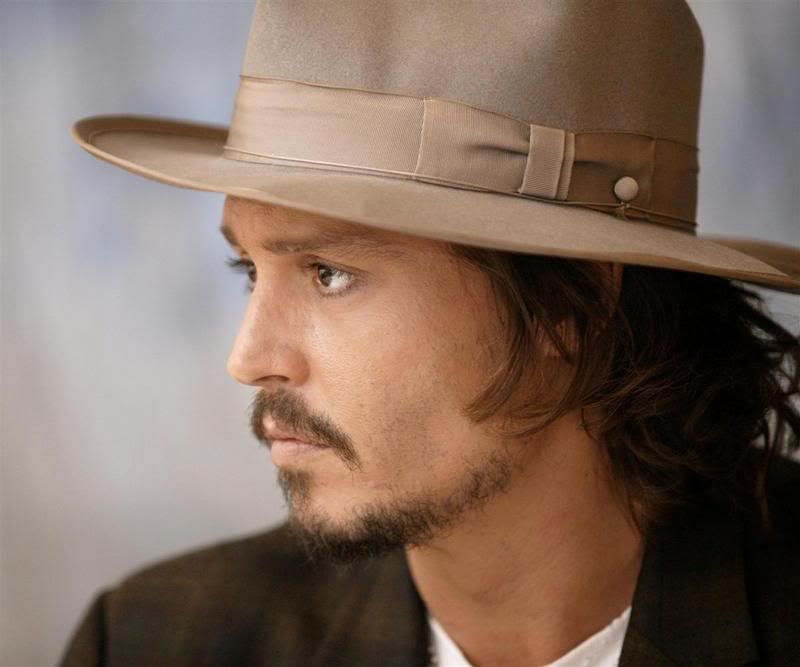
Johnny Depp is a brave man


by
R. O'DONNELL


Johnny Depp is a brave man. In an age where bravery is hard to find, let alone name, Johnny Depp is a brave man that has touched my heart specific. He has reached out and taken a single finger and gently brushed it against the beating of my spirit. He has done this as a writer. He has done this as an actor. He has done this as a director. But more importantly, he has done this as a man.

The Brave, written by Paul McCudden, Johnny Depp, and D.P. Depp (based on the novel by Gregory McDonald,) and nominated at the Cannes Film Festival for a Golden Palm for Depp's performance, reveals a world of poverty that we would rather forget about. Poverty that far exceeds material possessions but evolves into a deficiency of the human spirit; exhausted through years of oppression and then neglect. Whether that poverty touches a Native American named Raphael (Depp's Character) or a Mexican named Luis (Luis Guzm's character), it seeps into the soul and inevitably alters the mind like a bitter and dangerous drug.

Poverty is something most of us will never endure, and so to see it on the screen in front of us is as distant and incomprehensible as the violence also dripping crimson from the screen these days. Unless you've sat in a ramshackled trailer wondering how to feed your family while thinking prostitution might be a viable alternative to minimum wage, a film like The Brave is a far-flung pill to swallow. We just don't get it. We view it simply as a movie to be critiqued alongside King Kong and the 40 Year Old Virgin. A better life has made us jaded and somewhat numb around the edges.

The story is straightforward and sadly sinister, whereby a forlorn Native American Indian living on a garbage-heap/trailer park with his wife and kids agrees to be tortured to death for fifty thousand dollars. Marlon Brando is McCarthy, the philosophical producer of "snuff" films, delivering a performance reminiscent of Colonel Walter E. Kurtz in Coppola's Apocalypse Now. Director Depp has allowed the camera to seize what few really understood about Brando's acting technique: simply let the camera roll and it will capture a performance that is both original and profound. McCarthy is a fiend; an angel of death with real tears in his eyes as he delicately explains how suffering excruciating pain until death is a testament to one's worth. He is no different than a pornographer defending their occupation to exploit the sufferers of sexual misconduct. That is the McCarthy character, a man who takes advantage of the wounded and victimized. Deep down, he despises all human beings, and ultimately himself.

There are wonderful scenes, touching scenes, humorous, and deeply tragic as Depp allows us to watch unencumbered by traditional tricks-of-the-trade. What's left to see and experience is an eclectic community on the brink of obliteration living in the moment and dancing recklessly on and on. There is no glamour, no Hollywood sugarcoating, just the raw visual examples of everyday people trying so desperately to endure.

Some of my favorite moments where between Raphael and Father Stratton. Passionately portrayed by Clarence Williams III, an actor of extraordinary depth (and highly underrated), his being embodied the enormous struggle any organized religion has in helping the poor carry on, to endure through faith and assured salvation. Confined by the doctrines of the church promising an afterlife of true riches, Father Stratton can only give words that serve as Band-Aids on his parishioner's ripped and bleeding souls. For he too is neglected, on hands and knees scrubbing his pews that in the city not far away would be taken care of by scores of altar boys. Sadly-money rules in all places, even sacred.

Johnny Depp is a brave man, and his film a small and mighty testament to his valor. It is, as it may be with many a great artist's work, an uncomfortable reminder that we all walk the thin blue line, and that poverty and despair can tap us on the shoulder at any moment, and swiftly push us to the other side. That if we should find ourselves there, living in the squalor, that we might be warriors for our families, and at all costs, willing to be The Brave.

I Remember John...


By
R. O'DONNELL


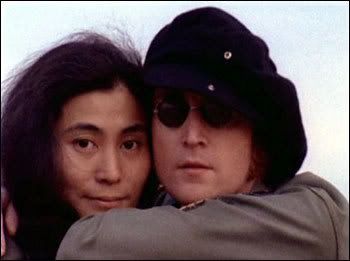
A buddy just sent me an iCard with a picture of John and Yoko inscribed, "we miss you John."

It made me really sad. I couldn't help the tears. I remember all the hoopla that was the Beatles. The yeah-yeah days when they first arrived - all the girls on my block in Philadelphia picking their favorite in the band. I remember lunch boxes, buttons, and Saturday morning cartoons. I remember John saying we're as big as Jesus Christ and their records being burned in piles of protest throughout suburbia. I remember their switching gears, pop songs dissolving into folk rock about run away girls, "Rocky Raccoon," and "Sgt. Peppers Lonely Hearts Club Band." I remember weekend sleepovers with friends, listening to the long version of "Hey Jude," while making-out with someone's flower child. I remember their revolution/evolution into the world of lava lamps and psychedelics. I remember the secret messages if you played LPs backwards, about burying Paul, and I am the walrus. I remember my oldest brother waiting for their next LP as if he was going to shoot it into his arm. I remember the break-ups, the harsh words, and the bitterness between old friends Paul and John. I remember the goody Linda love thing while the black-sheeps got all bare-assed for the press. I remember John's struggle kicking cigarettes, and wanting to be a stay at home dad. I remember the solo sound of the rebels that lived in the castle Dakota on my block. I remember being 20-something and dropping acid just to Imagine. And I remember meeting John and Yoko on Seventh Avenue in New York. One week later he was gone.

The Beatles were the music that carved into our consciousness everything from wacky fashion trips to earnest war protests. And so now I get this silly reminder that I'm old enough to have been there, old enough to have thought when the announcement came over the television in Gleason's Bar on seventh avenue, that John was dead, that it had to be a lie. A really awful lie. I just talked with him, stood right next to him, talking doggies in the window at this pet store on our block.

I'm heading toward my apartment on 72nd street, the West side, my starving artists days, and I see this woman with gorgeous long black hair flowing down around her bum. I was young and stupid, so I made my way to meet her. I'm not even thinking about the tall lanky guy standing next to her. There's enough space for me to slip in there between them. So I did. They're chatting away about the puppies in the window when I join in, pointing and cooing like a jerk. I glanced to my right and noticed the woman was more mature than I had expected - I thought she was a teenager from behind. Then, I get all electrified because I instantly knew that standing to my left was John Lennon. Omigawd. I desperately acted cool. And to my delight they simply kept on chatting it up about pet care or whatever. John with his accent up and down and all sing-songy just like he was famous for, and I was mesmerized for good.

The whole thing lasted only minutes, but I walked away assured; felt I handled that pretty good, leaving them alone. They lived in my neighborhood, so I saw them walking hand in hand many times before. They often took rides in the horse-drawn carriages along Central Park and one time Yoko even sent a dish of food to our block party, but this was real up close and personal - he was a Beatle after-all.

Weeks later, I'm eating burgers and drinking wine with this pretty gal I just met and the television above our heads spouts its poison. Everyone stood up. The place was completely still. Some muffled screams, a few quiet sobs, but this could not be happening. It made no sense at all.

Later, I walked by the Dakota, before it was too heavily guarded and roped off. It was already happening though. The world was in mourning. The city felt so cold, a little sinister than before. It was dreadful. Really very sad. And I couldn't help but remember standing between the lost legend and his woman, wondering why'd they let me get so close? Just people I guess. A couple of lovers on a stroll. Easy going, no big deal, just watching the wheels go round and round.

4.07.2004

MY SUMMER WITH DEL


STOP SMILING
#17
THE COMEDY ISSUE:
http://www.stopsmilingonline.com

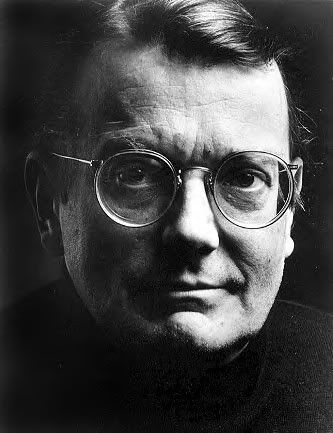
Improvisational comedians have called Del Close the guru, the creative spark that helped launch the careers of Bill Murray, John Candy, and John Belushi, to name only a few. When he wasn’t institutionalized by his Second City colleagues, Del spent his quiet time musing in the potsmoke of his legendary Chicago apartment. Find out the real story from someone who was right alongside him.

MY SUMMER WITH DEL

By
R. O'DONNELL


Once, Chicago was good for comedy. Once, they were sloppy drunk in love. A funky flaming affair where comedy was ravished and left wanting, recklessly thrust into the faces of any audience willing to sit in a makeshift theater stuck inside a seedy bar. Crosscurrents was the rendezvous. A gloomy cabaret on the corner of Belmont and Wilton that at one time or another housed steamy liaisons between The Annoyance Theater, New Age Vaudeville, The Improv Olympic, and Del Close.

Owned and operated by Thomas L. Goodman, Crosscurrents was where comedy screwed its brains out. Remember "The Friday Night Show," Aaron Freeman's "Council Wars," "The Legend of Lily Overstreet," Paul Krassner, "On the Edge," and the all-girl sketch group Somebody's Daughters? This was an orgy of political satire, improvisation, variety, vaudeville, and theater screwing endlessly under stage lights. It was stripping in the theater, walking naked through the bar, lap-dances in the cabaret, and hand jobs in the hall. Every nook and cranny, anywhere they could, in this old Swedish meeting hall—Chicago and comedy couldn’t get enough. This was where the perverts and junkies, the wannabes and the pros hung out. A comedy bordello, a red-light district where humor was pimping itself, was charging cheap admission to all peeping Toms.

Here the talent was adolescent, seriously pissed-off, and brilliant, etching quotable graffiti on the walls. Here they drank, smoked, took mind-altering anything-they-could-get-their-hands-on, and danced wildly from room to room. Out of this lustful tarantella, more Comedy was born. There were the screaming infants “Splatter Theater,” “Honor Finnegan vs. the Brain of the Galaxy,” and the “TV Dinner Hour.” This was 1987.

But nothing lasts forever. Sticky, faded love letters penned by journalists Rick Kogan, Jack Helbig, and Lawrence Bommer were placed in shoeboxes, forgotten. Chicago and comedy didn't give a shit about each other anymore, abandoning their bastard children. They survived, of course. The kiddies all did good; they looked and acted like their parents. They gave us “The Brady Bunch Live,” “Twisted,” “Coed Prison Sluts,” “Upright Citizen's Brigade,” and the “R. Rated” TV show.

But who threw the party when the surly couple met? Who decided to ignite their robust passion, put acid in their drinks, and invite everyone to toast? Del Close did. Scruffy bastard. (I can see him laugh, and half say outta the corner of his mouth, “Y’goddam right I did.”) Yeah, this dark and aging cherub, the stand-up comic that conspired with the likes of Severn Darden and later Charna Halpern, he’s the asshole that decided Chicago and comedy would be good for one another. And then? He even took care of all their deserted offspring… Scruffy, funny bastard.

Del Close: greasy hair, twisted metal-rimmed glasses, and a pilot’s coat, brown, fading piece o’ shit. (He'd kicked the chemicals, since John Belushi died.) Yeah, Del Close had chiseled off 20, 30 years by living hard and liking it. His fingers were rusty from tobacco, his teeth severely stained, and his posture crooked like a villain.

You would swear he was a movie star.

“That’s alright,” Del would say, “Charna’s on it.” Anything about his partner, and he was instantly defensive. “We’re friends,” he would say. They watched each other’s back. They understood each other. Don’t you get between them. I’m serious now. I’m serious.

When Crosscurrents crashed and burned, the heated passion over, and with Goodman holding all the bills, the aftermath just gasped and fizzled. Little sparks here and there made small media appearances, but these were lean and mean, and shitty all around.

Finally the Fall, the changing of the guard, and there was a cooling down, chilly weather, Chicago-easy-does-it… which was fine. Del was abusing comics with his latest "Wasteland" for DC, landing movie roles as the Reverend Meeker in the remake of "The Blob" with Kevin Dillon, and as the Alderman in Brian De Palma’s "The Fugitive" with Kevin Costner… so he was doing fine.

“All I wanted was to work in film,” said Del. “I’ve done alright. I’ve done a couple of features this year.”

Yeah, he was all humble, sitting in his kitchen that looked almost boarded up. After showing off his “Blob” in a jar above the fridge, Del and I read comic books. They were his second private stash. He had them everywhere, several drugstore display racks stuffed in all the blind spots and dark shadows. It was nice not to deal with furniture. One overgrown kid’s filthy bedroom. No parents, and lots and lots of toys.

“I got a haircut,” Del said.

“Looks good,” I say, not noticing a difference.

“It’s easier to manage.”

“You had it long?”

“I went through that… mad professor, hippie type.”

“Didn’t stick?”

“Better short.”

“Yeah, better.”

This wasn’t brilliant banter. This wasn’t wisdom from the master or worldly insights. This was boring, no-nothing conversation from a couple of shmoes just hanging out. That’s all. But locked inside this gibberish was the man in all his unsophisticated splendor, this was simply Del.

I visited the instigator, not once, but throughout an entire summer I took the gamble, and walked up to the guru’s lair—uninvited—knocking on his door. The funny bastard answered. Go figure. And we’d get high and talk.

His cannabis was nurtured, sweet-talked, maybe even massaged when no one watched, because it loved to turn you on. Del would ever-so-coolly pull this trapdoor down from up inside his closet. His bedroom looked all prisoner-of-war, gray the central color, and in this hideout, he produced the biggest stash of pot. Oh-my-stinking-lord!

I was so trashed, baked, wasted, stoned… going, going, gone. I’m a lightweight, and I hate to lose control. (Now I stick to coffee, thank you.) Suddenly this gothic grimy playground was effervescent, flies dancing on the walls, furniture melting into floorboards, and Del looked just like the devil, swear t’god. Paranoia sat beside me, whispered in my ear, “He can read your mind.”

But Del wasn’t hosting fear, wasn’t trying to freak me out at all. He hadn’t even noticed I was fighting for my sanity, playing mental tug-of-war.

I tried to speak, but my lips just stuck together as I said something all marshmallow-y and stupid, “My hair is breathing.”

“Cool,” I think he said.

He didn’t really care. He was content, happy to be sitting in his kitchen; happy to be alive.

“I can’t feel my legs,” I told him.

“You’ll get over it,” he said.

Del wasn’t spewing insights, wasn’t a bit pretentious, not at all. He just wanted easy conversation. Didn’t want to think much. Hush the mind a bit.

It’s something we don’t consider until we’re old, the way a person just wants a trouble-free existence. Fame and fortune’s always hungry, and lots of work to feed. It doesn’t soothe the spirit. Doesn’t fill the holes. Friends do that and, according to Del, all his pals were dying. This was what he was muttering in his kitchen... all his goddam friends were gone.

“I’ve had good friends,” he kept saying, “Very good friends.” Then he'd get all quite, look at the floor, and just sit there, maybe have a coughing fit. (Cigarettes punched him in the chest, bruised his lungs—he never quite recovered. Nasty little cancer sticks… god how much we love 'em.)

There was a cat, I think, but I don’t remember seeing it. Maybe sleeping on the futon pushed into the corner of his bedroom. Maybe it was there, this black cat, stretched out among the crumbled mountain of covers, but I really don’t recall. I couldn’t imagine him taking care of anything. He had enough just taking care of Del.

He would show me clippings, obituaries. Some recently torn from local papers; others faded, nasty brown. This was what occupied his brilliance. Aging, spinning with the Earth, Del was reminiscing. He was sharing feelings with a stranger. Which probably made it easier, talking with a no-one-in-particular. Spilling your guts to someone that can walk away, close the door behind them, never to return … that’s a poor man’s therapy.

Or maybe he really liked me, felt a kinship, but I doubt it. He just needed an ear to burn. To confess that he was scared just like the rest of us: Of being all alone.

“Sheila died over the weekend,” Del would tell me, obituary in hand. (I think her name was Sheila.) “She really wasn’t old. Sheila… a very talented actor from San Francisco. We use to work together.” Then he’d tape her obit to the dirty kitchen window. There were quite a few, taped there, and then forgotten.

The pot and I ask him all kinds of stupid shit. “How do you approach auditions? You go in a crazed, all worked up?” He’d just stared at me, answer with a growl of sorts, “You show up, do whatever the director wants, be professional. That’s all.”
“Do you go in with an agenda?”

“Yeah… get the fucking job.”

The first time I met Del he was playing Polonius in "Hamlet" at Wisdom Bridge Theatre. It was 1985. I knew the legend that was Del Close, but not this man in front of me, sweating under the stage lights. He’s giving this killer performance and I’m racking my brain, I know this guy! He’s? He’s? Someone, somebody goddam it. Damn, I know this guy…

That night, Del hitched a ride with us. He sat next to me and we talked a bit. He was gracious, very warm. Nothing suggested he was a comedy legend, Joseph Jefferson Award winner, one of the founders of Second City, the Improv Olympic, regular on "My Mother the Car" and "Get Smart," co-author of Truth in Comedy, yadda, yadda, yadda… he just seemed content, happy to get a ride, save the cab fare. That was it. No big shakes. Simple was the man.

My next encounter with the guru was at Crosscurrents. Thom Goodman was upstairs in his grubby office on the phone, trying to manipulate the media, sell more tickets, pay the bills, while all around him the orgy continued. It was shameful really: Chicago and comedy making-out. Tonguing one another anywhere they could. High school is what it felt like. In addition, there were all these improv students hanging out, watching, taking notes.

Behind the bar was the versatile Bridget Murphy. She’d go on to create "Milly’s Orchard Show." She tended bar but at night, hit the main stage doing a sort of burlesque whereby she dressed up as a greasy fat man telling raunchy jokes, and then stripped to reveal a sexy Playboy Bunny. Somebody’s Daughters were running around half crazed, rehearsing "Bards, Broads and Sacrifice.” Mick Napier was sitting at a table with his allies, talking Metraform, while Andy Dick was jumping up and down, begging to be noticed. There was this slaphappy kid named Christopher Farley playing pinball in the hall. He was the most endearing clown that no one wanted to play with.

Del… he was sitting at the end of the bar, smoking, coughing, lurking in the shadows. He shook my hand, offered me a cigarette. I took it, lit it, and drank a beer that tasted good.

“I saw your show, 'Elmore and Gwen',” he said, never looking up.

I was waiting to get my assed kicked. I was a writer from New York, came here looking for the comedy scene, and landed in the hornet’s nest. I wasn’t one of them. I scripted everything. I was going to get stung. So, I faked I didn’t give a rat’s ass. What else to do?

He cleared his throat to mumble, “It was consistent.”

“Uh huh,” was all I said.

“It stayed the course. All your jokes were consistent with the genre. It was vaudeville… very animated. I liked it.”
Panic was dripping down the crack of my ass. I think they call that 'flop-sweat'. I told him, “Thanks, appreciated.”
“Can you write me something next time?”

“Yeah.”

Del was in my second review, "The TV Dinner Hour." To be honest, he got angry, had a fit about the gig. He wanted to be in a play, have a straight acting job. Del didn’t realize I used improv for the bones of everything I worked on. The words came after I knew whom I was writing for, the glove that fits the hand.

“Where’s the script?” he asked me, standing all crooked, smoking under the Crosscurrents’ logo.

“No script. You’re the improv guru. I’m going to use video. Just create a TV character, improvise your ass off. You’ll run on a monitor above the stage. It’ll be cool, you’ll dig it.”

“Jesus Christ… I wanted words.”

“Just video and improv.”

“Video? You’ll destroy the medium.”

He stormed off mumbling “bastard” and “Nazi” something-or-other. The sign above my head was swaying. Winter was coming. It was getting cold. A wino from across the street was pissing on the sidewalk. He looked up, gave me the finger. Thanks, I smiled back.

A week later Del cornered me in the bar, asking, “Can I do it stoned?”

“Anyway you want, man.”

We shook hands. That was it. Done.

Peter Neville, videographer, took care of all the rest. Stoned and coughing up a fit, Del committed to video one of his best-recorded improvs: The Very Reverend Thing of the First Generic Church of What’s-his-name. It played on monitors overhead that channel-surfed until it landed on his bulbous face. Scruffy talented bastard, he almost stole the show.

The "TV Dinner Hour," directed by Amy McKenzie and featuring Megan Cavanagh, (now the voice of Jimmy Neutron’s mom,) did alright, and pushed us into the arms of the sultry mistress, screwing like all the rest.

Sitting in his kitchen, I reminded him, “You called me a Nazi once.”

He laughed, saying, “I meant it as a compliment.”

Sure he did.

I showed up again, uninvited, but this time he didn’t answer. I stood there waiting. I felt his eyes peeking from between the crusty curtains. He didn’t want to talk. A squirrel was chewing on the railing that was rotting around his porch. Standing there was useless; the wizard wasn’t coming out.

I walked across the street to Charna’s place. I knocked and waited. She answered, let me in. Up the stairs to the second floor, I sat in her living room while she offered me a Coke. Her shaggy little dog just laid there on the floor. Goofy puppy had the life. It ate and slept better than most of Charna's students.

“Thanks for introducing me to Stephen,” she said. An eccentric friend, Kastner was a magnificent painter, and they were getting it on. Funky, dirty love. Everybody’s doing it.

“Sure…” I said back at her, sipping from my soda can.

“We’ve got a development deal in California, the Improv Olympic on network television. It might happen.”
“Cool.”

She looked really tan and radiant. Striking. Younger than before. She was a happy Jewish girl.

A few weeks later, I was sitting in the guru’s kitchen once again. When he greeted me at the door, he smiled, seemed pleased that I stopped in. Before I entered, I noticed that squirrel’s drying carcass near the front porch. I think it should’ve munched on someone else’s railing. The spirit of the house reached out and got him, or that cat I never saw.

In the kitchen, Del filled a jelly jar up with soda. He still lived like college. Actually, he lived as most of his students did: like characters out of “Animal House.” This was what I was thinking as I sipped my Orange Crush, talked a little more.

“I’m losing weight,” he told me. “Stopped eating a big breakfast. I’m feeling pretty good.”

“Cutting out a breakfast?”

“Stop the bacon and eggs.”

“No shit?”

“My face is looking thinner. Better for the movie roles.”

He looked better, healthier, but the hard life wouldn’t stop punching him in the face. That’s were you saw the swelling. In the eyes, you saw the scars, the battles, the spirit drifting to the surface, flipping him the bird… shouldn’t have partied all the time. Yeah whatever. Nazi bastards.

Del loved sporting Wasteland, a somewhat autobiographical hodgepodge of stories for DC comics that he penned with John Ostrander. It was really twisted, folks. All messed up and psychedelic. Fun to look at while turning pages that almost got you high. I half expected my mother to walk in, scream at me for reading "trash." As a kid, it was something I would’ve discovered, hidden under the bed for late night reading. You know, it would’ve scared the boogeyman.

“We have something in common,” he said, broke the silence.

“Oh yeah?”

“We both ran away with traveling shows.”

“Sells and Grey,” I told him.

“Dr. Dracula's Magic Horror Show,” he countered.

“They had an elephant that still put up the big top.”

“I was a fire-eater.”

“Ventriloquist.”

“That’s awful. I hate puppets.”

“You and everybody else.”

“I was only fifteen or so.”

“Seventeen.”

Then all you could hear was the constant ruffling of paper until he blurted out, chuckled, “Could’ve been worse.”

“How’s that?”

“Could’ve been a mime.”

“Jesus, that’ll get you killed.”

“You bet.”

He sighed, I sighed and we both went back to reading for a while.

The last time I saw Del was when his theater opened up on Clark Street. It was packed with all his students, friends, and other showbiz types. I pointed to the monitors high above the stage and said, “That’ll destroy the medium.”

Del didn’t recall the conversation, and there wasn’t time to remind him. But he was glad to see me, surprised me with this goofy smile. It’s a look I’ll carry with me, the final fading image, because I never talked to him again.

I was living in New York when Del got sick and died. March 4, 1999. He was only 64. I tore his obituary from the paper, taped it to my kitchen window. I wanted to say something, but there were other people much closer to the man.

When I returned to Chicago, I went by Del’s house, saw another squirrel chewing on the railing. I picked a stone up and hurled it at the shabby thing. It wasn’t fazed at all. It just stood up, looked at me sideways, as if saying, Piss-off, the guru doesn’t live here anymore.